Megatrend Observatory

Assumptions & scenarios

A trend can continue while its expected consequence changes direction. Open an assumption to see what could undo it, or explore what happens when several assumptions change together.

Twelve reversals · Three possible futures

Twelve assumptions that could unravel

For each one, distinguish the measurable change from the consequence people have come to expect. An older population is observable. A heavier burden on younger people depends on health, work, care and public policy.

AssumptionRival powers will keep pulling the world economy into separate blocs.Reintegration

How it could unravel

Households and exporters bear the cost of duplicate supply chains. Rival governments agree common rules for a handful of essentials, then extend the arrangements as firms build constituencies for trade.

What follows

A government could tighten controls on chips while cooperating on food, medicines and shipping. Humanitarian agencies might regain purchasing options even as diplomatic relations remain difficult.

What to watch

Compare trade between and within political blocs in the same industries. Check whether new agreements lead to actual shipments across former divides.

AssumptionAs AI gets more capable, employers will steadily remove people from decisions.Human–AI hybrid

How it could unravel

A system that excels at one task can still fail over a long case with incomplete information. When errors are costly or a decision needs an accountable owner, employers may redesign roles around human judgement and machine assistance.

What follows

Preparing an assessment could become cheaper while experienced caseworkers spend more time hearing appeals, checking exceptions and talking to families. Some routine tasks could still disappear.

What to watch

Track who signs off real cases, the proportion needing intervention, and how much staff time is spent repairing errors. Compare these with productivity over the whole case.

AssumptionThe green transition will accelerate everywhere on a similar timetable.Transition divergence

How it could unravel

Cheap generation can spread rapidly where grids, finance and political consent are available. Elsewhere queues for connections, high borrowing costs or fossil-fuel commitments can delay adoption. Small off-grid systems may follow a third path.

What follows

Neighbouring economies could face different electricity prices and reliability. Households without affordable connections may gain little from cheap solar power installed nearby.

What to watch

Compare new capacity with electricity actually delivered, renewable power curtailed, grid waiting times, off-grid access and fossil generation by region.

AssumptionAn older population will necessarily create a heavier dependency burden.A longevity dividend

How it could unravel

If additional years of life are healthy, accessible workplaces and flexible hours can let more people choose paid or voluntary work and support others. A widening gap between lifespan and healthy lifespan would push demand for care in the other direction.

What follows

Two places with the same proportion of older people could face very different care needs and tax bases. People in physically demanding jobs may have fewer opportunities to work longer.

What to watch

Follow healthy life expectancy, disability at a given age, desired and actual employment at older ages, and unpaid care by income and occupation.

AssumptionUrbanisation will concentrate ever more people in the largest cities.Polycentric or shrinking urban futures

How it could unravel

Housing costs, smaller birth cohorts, climate exposure and flexible work can redirect households towards secondary cities or smaller centres. A country's urban share can grow while particular cities lose residents.

What follows

A shrinking city still has water mains and public transport to maintain. A growing regional town may need clinics and rental homes well before national population figures suggest pressure.

What to watch

Compare net migration, natural population change, vacancies and demand for services across cities of different sizes, using consistent boundaries.

AssumptionIndividual choice and self-reliance will keep displacing collective provision.A new collectivism

How it could unravel

Housing, care or insurance costs may become too high to bear individually. Shared ownership, unions, mutual aid and pooled insurance can become practical responses, especially when they secure stable funding.

What follows

Neighbours could pool energy or organise care shifts. Groups with few assets to share may need public support, and membership rules could exclude newcomers.

What to watch

Look for sustained membership, pooled budgets and services delivered through cooperatives, mutuals or unions after the immediate crisis has passed.

AssumptionDistrust and democratic decline will keep reinforcing each other.Democratic renewal

How it could unravel

Civic organising can defend election administration and courts. Where representative institutions respond visibly to public priorities, people may begin to expect participation to matter.

What follows

Renewal could start locally or in only a few countries. For groups accustomed to exclusion, a practical test would be whether a complaint changes a decision and whether an adverse ruling is respected.

What to watch

Track episodes of democratisation alongside peaceful transfers, judicial independence, civic freedoms and implementation of decisions made with public participation.

AssumptionMore services will become digital-only because people value convenience.Selective de-digitalisation

How it could unravel

Outages, fraud, inaccessible interfaces or a desire for privacy can make a physical channel valuable. A town may restore a counter or cash option while digitising much of its back office.

What follows

Someone who has lost their phone or identity documents in a flood could still access assistance. Providing parallel channels would require staff and funding even in ordinary weeks.

What to watch

Look for funded offline-service guarantees, staffed counters and cash acceptance. Check who uses them and how access changes during outages.

AssumptionA few platform owners will capture more control over essential technology.Distributed technological sovereignty

How it could unravel

Interoperable services, open models, shared public infrastructure and procurement rules can give institutions a credible choice of suppliers. Local control is more plausible when someone can maintain the alternative.

What follows

A municipality might retain its records and switch service providers during a dispute. Dependence could persist one layer down if both providers rely on the same cloud or chips.

What to watch

Check actual migrations between suppliers, costs of switching, open-model performance in real tasks and concentration in the underlying infrastructure.

AssumptionEconomic gains will continue to concentrate among asset owners.Redistribution of economic power

How it could unravel

Collective bargaining, wider ownership, taxes and transfers, or publicly owned assets could change who receives returns from technology and housing. Their effect depends on enforcement and political support.

What follows

A productivity gain might raise take-home pay or fund universal services. Income gaps could narrow while inherited wealth stays concentrated, giving different answers to the question of who has gained.

What to watch

Track labour's share of income, disposable household income after taxes and transfers, and wealth shares separately. Compare groups within countries as well as country averages.

AssumptionHealth systems will devote an ever-growing share of effort to managing chronic illness.Prevention or cure replaces management for some conditions

How it could unravel

Effective prevention or a durable treatment could reduce new cases or years lived with a condition. Access and uptake determine whose illness is avoided. A resurgence of infectious disease offers a quite different route to changing the mix of demand.

What follows

Some clinics might shift resources upstream while others face a double burden of infection and chronic illness. Longer survival can increase the number living with a condition even as incidence falls.

What to watch

Compare age-specific incidence, years lived with disability, treatment access and preventable admissions. Track infectious-disease burden separately.

AssumptionResource constraints will steadily make essential goods more expensive.Selective abundance

How it could unravel

Cheaper electricity, material substitution, recycling or more efficient production could loosen particular constraints. Water, land, transport or ownership rights can become the next limiting factor.

What follows

Cheap power could lower the cost of cooling or water treatment in connected places. A household facing a high connection charge could still go without either.

What to watch

Track delivered prices, reliability and affordability for final users alongside wholesale input costs. Check for new bottlenecks as existing ones ease.

Three compound scenarios

These imagined scenes combine several reversals. They have no assigned probabilities. Read each one as a test of the decisions an institution might make today.

Illustrative 2040 scenario

The unexpected age of abundance

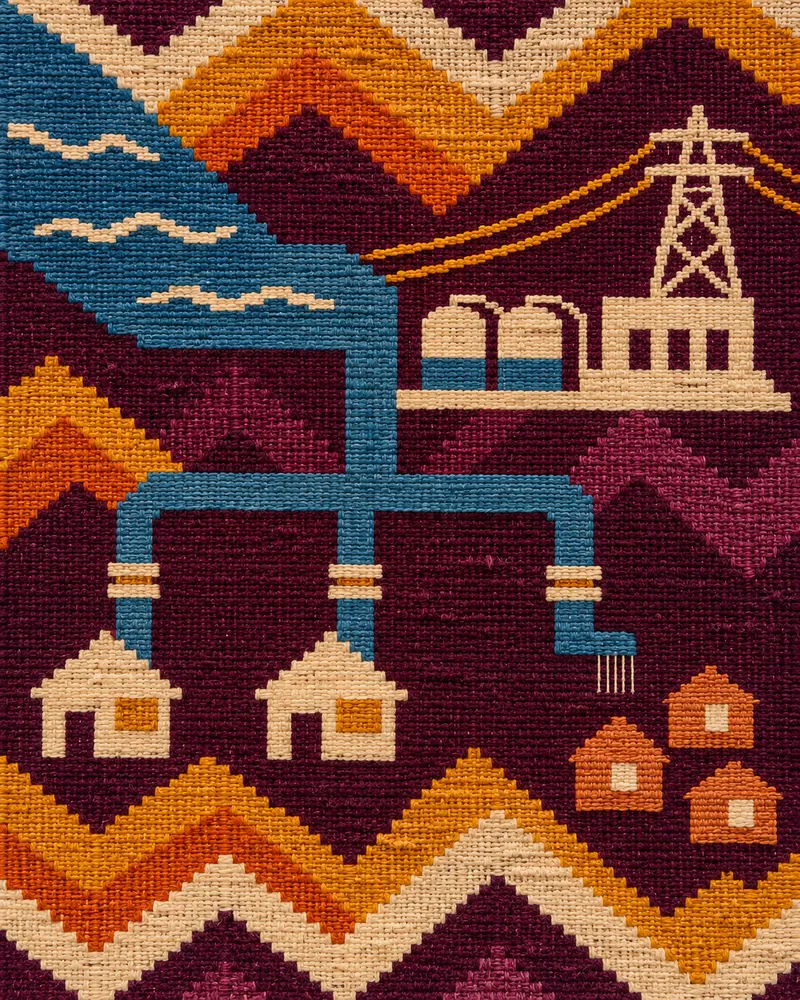
Imagine 2040. After a flood, a municipal workshop makes replacement pump parts locally from a shared design. The water utility can run its treatment works cheaply through the night. Across the municipal boundary, families still buy water by the container because their settlement has no pipe connection.

How this could happen

In this future, cheap clean power, AI-assisted discovery of materials and flexible manufacturing lower the energy, labour and transport required for selected essentials. Open licences help some producers copy successful designs.

Who gains and who could lose

Places with grids, workshops and purchasing power can turn lower production costs into reliable services. Where land, finance or patents are concentrated, the savings can accrue to owners while households remain excluded.

Early signs

Look for falling delivered costs and working local production across several sectors. Compare those gains with connection rates, household bills and ownership of the productive assets.


Illustrative 2040 scenario

The return of the human

Imagine 2040. A resident arrives at a local advice centre with a notice cancelling her housing support. Software reconstructs the file in minutes. A caseworker hears why one entry is wrong, phones the landlord and signs a correction the resident can appeal.

How this could happen

AI handles much of the preparation. Persistent errors in unusual cases, cheap synthetic evidence and legal duties to explain decisions increase the value of named people who can listen, verify, take responsibility and act.

Who gains and who could lose

Frontline staff gain authority where institutions fund their judgement and give them time. In a leaner service, wealthier users may buy personal attention while other residents struggle to reach someone empowered to help.

Early signs

Track the authority and staffing behind rights to human review, the time required to reach a person, and outcomes of appeals. Ask whose cases benefit from extra attention.

Illustrative 2040 scenario

The inversion of demographic vulnerability

Imagine 2040. In an ageing region, a retired electrician works two mornings a week and helps neighbours adapt their homes. Automation has eased a shortage of technicians. In a younger region, a large cohort of qualified school-leavers queues for a small intake of entry-level jobs.

How this could happen

Healthy longevity, accessible services and labour-saving technology ease pressure in some ageing places. Elsewhere, firms automate routine entry jobs faster than education, housing and labour markets can create routes into secure adulthood.

Who gains and who could lose

Either age structure could support prosperity under different institutions. Even in the older region, people who left strenuous work in poor health may miss the dividend, while young workers elsewhere could thrive where demand and investment grow.

Early signs

Compare disability-free years and unmet care needs in ageing regions with youth employment, progression into secure work and housing affordability in younger ones.

Try the hindsight question

Imagine a team in 2040 reading your strategy today. Which assumption did you get wrong? What early evidence did you overlook? Choose an indicator that would help you recognise the change in time.